A sewer can combine household and commercial wastewater with industrial inputs. In some systems, separately collected wastes are also accepted. The resulting mixture is specific to the customers, activities and waste handling practices connected to that system.
Influent is incoming wastewater. Effluent is water leaving treatment. Sludge is the separated or produced solid material. Biosolids usually refers to treated sewage solids prepared for certain uses. These names describe streams and processing; they do not establish that PFAS are absent. [2][1]
A clearer stream is not proof of PFAS destruction
Wastewater treatment removes or changes many pollutants, but those improvements do not automatically establish destruction of PFAS. Some chemicals remain in water, some associate with solids, and some precursors transform into other PFAS.
To judge the outcome, investigators need an accounting of incoming and outgoing material. A concentration can change when water is removed or another material is mixed in. Measuring only selected chemicals in one stream leaves unanswered questions about the remaining water, solids and unmeasured compounds. [1][2]
Why the chemical pattern can change
Some PFAS are precursors: substances that can transform into other PFAS. A measurement of only familiar end products can therefore miss part of the mixture. A 2023 study measured 92 PFAS before and after four types of biosolids treatment, including composting and anaerobic digestion. Precursors dominated the measured mixture. Heat treatment and composting changed the balance between precursors and terminal acids.
A higher concentration of a particular acid after treatment can reflect transformation. It does not establish that the plant manufactured PFAS from ordinary sewage ingredients. [1]
Land application creates another set of pathways
Applying biosolids moves the remaining chemicals onto land. Some PFAS tend to remain with solids, while others move more readily with water. Precursor changes can alter that balance after treatment or application, so an initial measurement is not necessarily the final chemical pattern.
The biosolids treatment study found that changes in PFAS composition could increase the potential for more mobile acids to enter surrounding water. That identifies a mechanism to investigate, not a prediction of a particular household well result. Soil, water movement, application history and follow up sampling still matter. [1][3]
Timing belongs in the sampling plan
A result represents the material collected at a stated place and time. Incoming water and outgoing water sampled simultaneously are not necessarily the same parcel, because water spends time in treatment. Solids may remain longer still.
The question should shape sampling. Routine operating conditions, an unusual accepted waste and a suspected short release may require different timing and locations. Laboratories also need methods suited to each material. A drinking water method cannot simply be assumed appropriate for a concentrated or solid wastewater sample. [4]
Making a plant report understandable
Identify each stream before comparing numbers. Include collection dates, units, flow or solids quantities, named chemicals and reporting limits. Results for water and dry solids describe different materials. Neither should be presented as a single interchangeable concentration.
The biosolids study tested a much wider list than familiar PFOA and PFOS alone, yet its authors still identified possible unmeasured precursors. A useful report states that limit plainly. Not detected means the method did not report a chemical at its specified level, not that every member of the PFAS family was proven absent. [1][4]
See the work
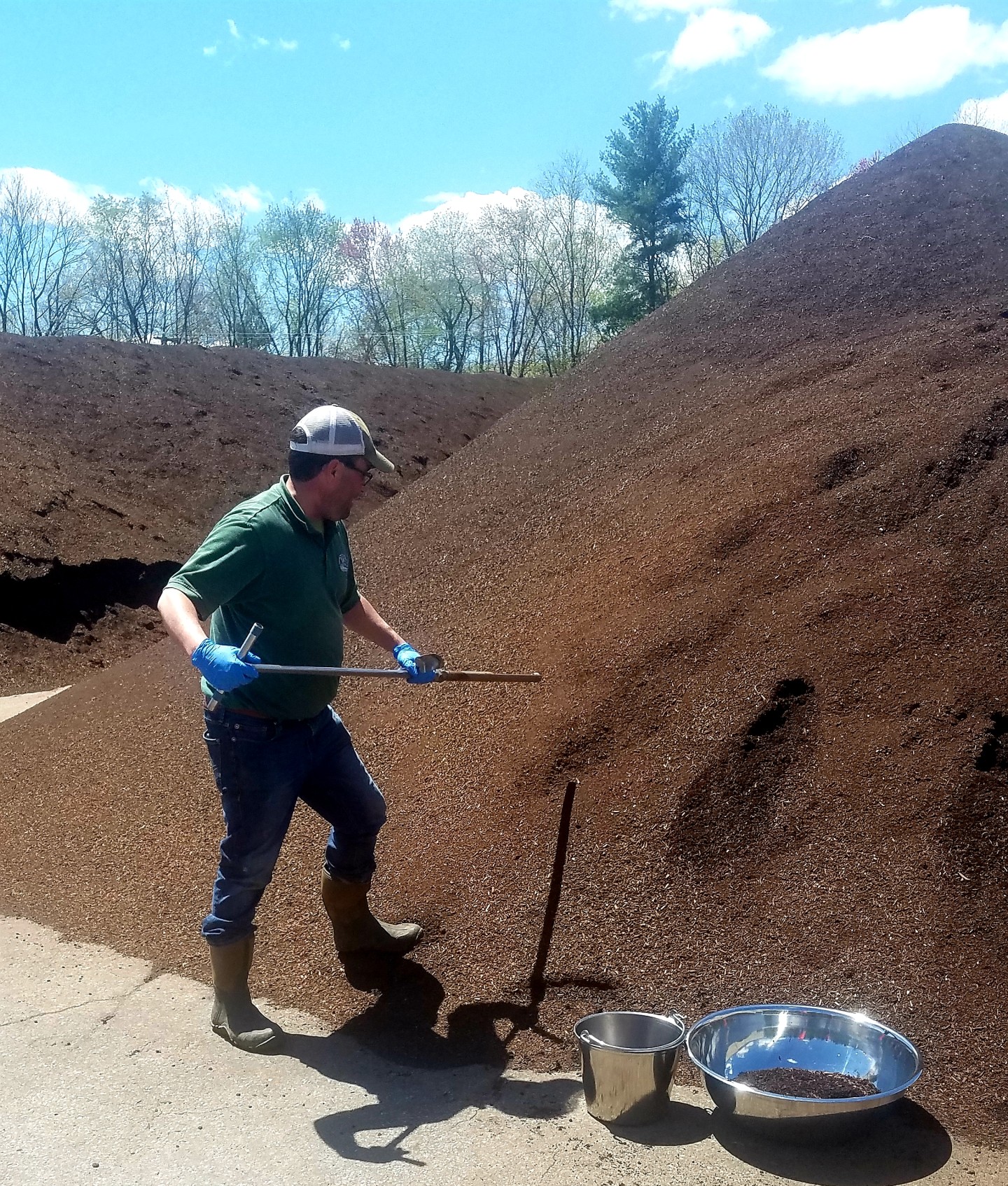
Collecting biosolids for PFAS research
A New Hampshire Department of Environmental Services employee collects biosolids for a study with USGS on PFAS partitioning between soils, biosolids, and water. This is a documented research sample, not a photograph of a Maine or Georgia site.
A focused webinar about how PFAS reach biosolids and septage and how land application can affect soil and water. A presentation PDF accompanies the series.
Michigan State University Extension and Center for PFAS Research